Cystoagaricus populinus
(Britzelm.) G.Muñoz, L.A.Parra & J.C.Zamora
Study description
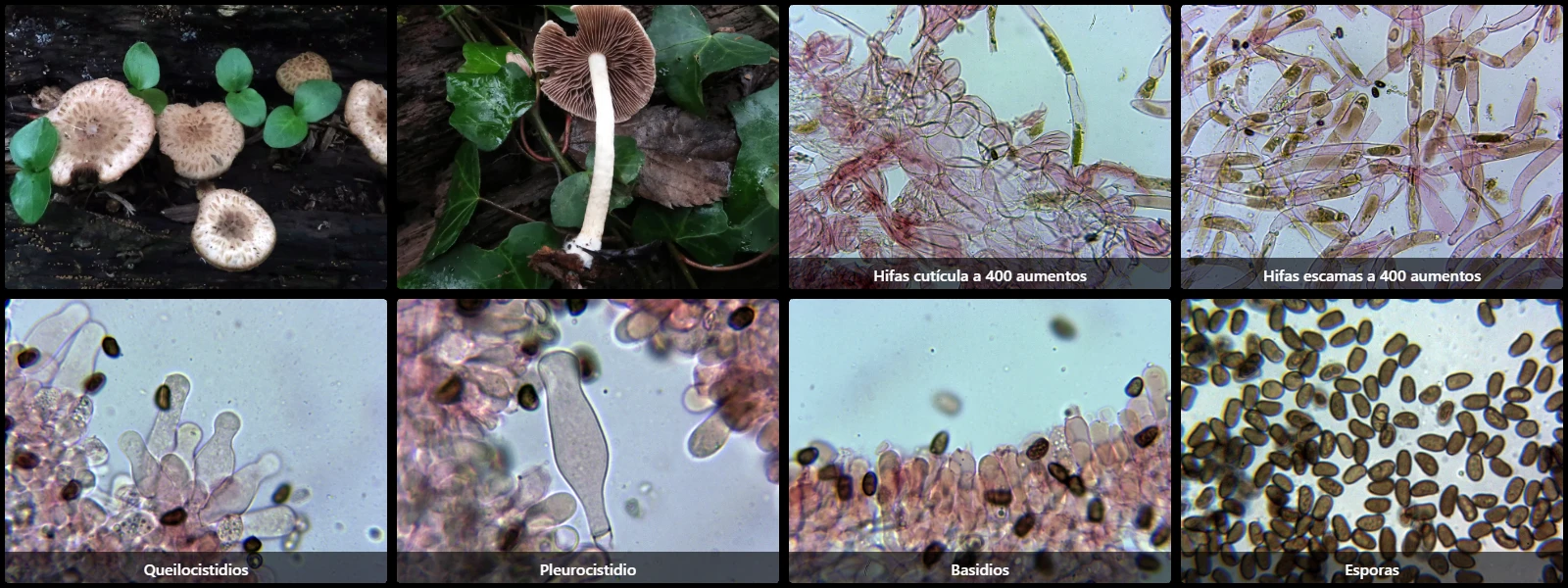
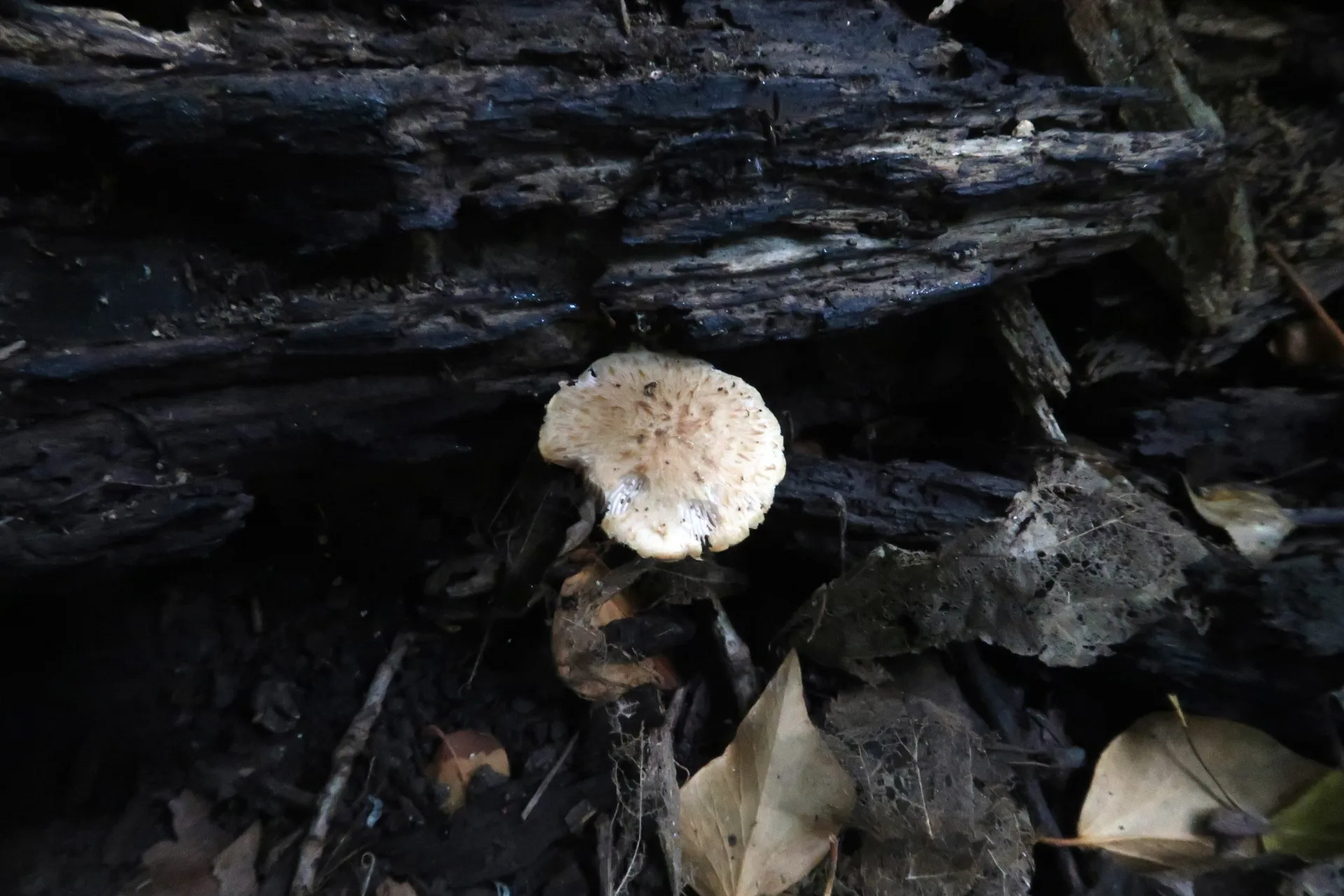
Formerly known as Psathyrella populina, growing on decaying wood of poplars (Populus), with a convex to flattened pileus 3 to 6 cm across, pale cream-brown, covered with abundant dark brown scales arranged radially, adnate brown to purplish lamellae, a cylindrical, fragile, whitish stipe slightly enlarged at the base, odour indistinct, and sweetish to insipid taste.
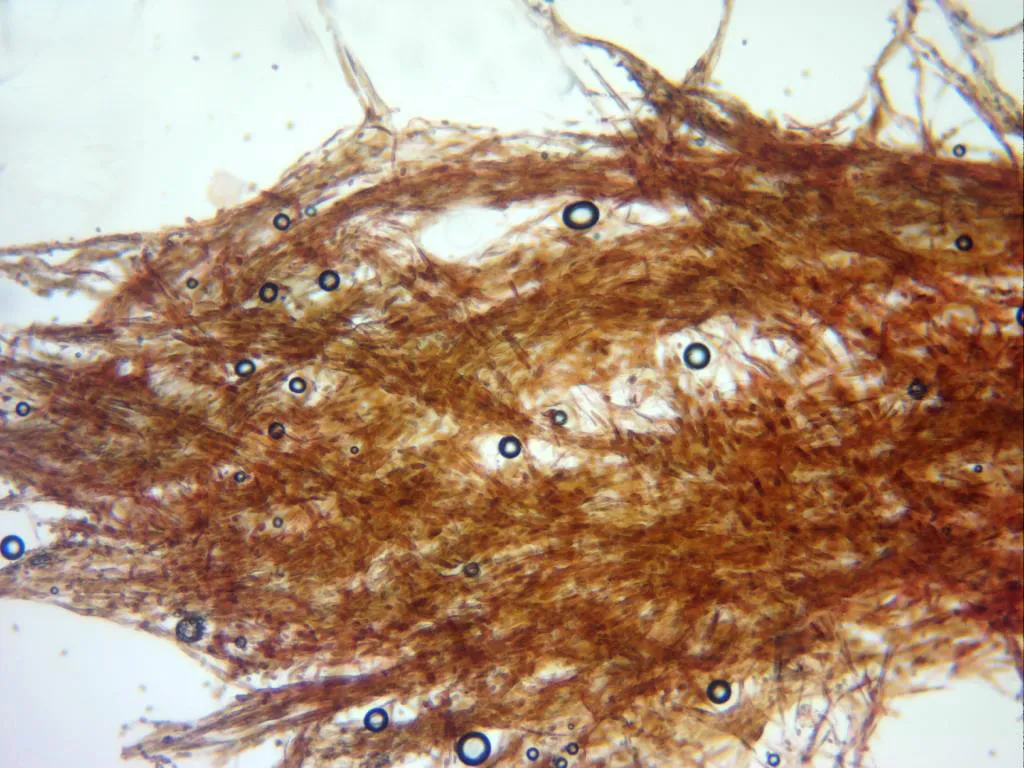
Pileipellis cellular, composed of subglobose to pyriform hyaline cells 20 to 40 µm in diameter, with emergent scale hyphae that are filiform, filled with brown encrusting pigment, 5 to 15 µm thick, septate with prominent clamp connections.
Cheilocystidia very abundant, rendering the gill edge sterile, utriform (bottle-shaped), 30 to 55 µm long, 12 to 18 µm wide, mixed with some pyriform to sphaeropedunculate cells.
Pleurocystidia scattered, utriform, 40 to 75 µm long and 12 to 20 µm wide.
Basidia subcylindrical to slightly clavate, 18 to 25 µm long, 7 to 9 µm wide, clamped at the base, 4-spored.
Spores cylindrical-ellipsoidal, irregular, with a truncate apex, brown under the microscope, smooth- and moderately thick-walled, 6.5 to 9 µm long, 4 to 5 µm wide, without an evident apiculus, with a distinct germ pore at the truncate pole.
Geographic references
Map generated from global occurrence data from GBIF. GBIF.
Study measurements
Values in Microns (µm)Macroscopic gallery
Microscopic gallery