Cystidiopostia hibernica
(Berk. & Broome) B.K.Cui, L.L.Shen & Y.C.Dai
Study description
Formerly known as Oligoporus parvus, associated with dead coniferous wood. Interestingly, Ryvarden treats Oligoporus parvus and Oligoporus hibernicus separately, describing microscopic differences primarily in spore size; today, based on molecular phylogenetic data, both are synonymised under the current combination Cystidiopostia hibernica.
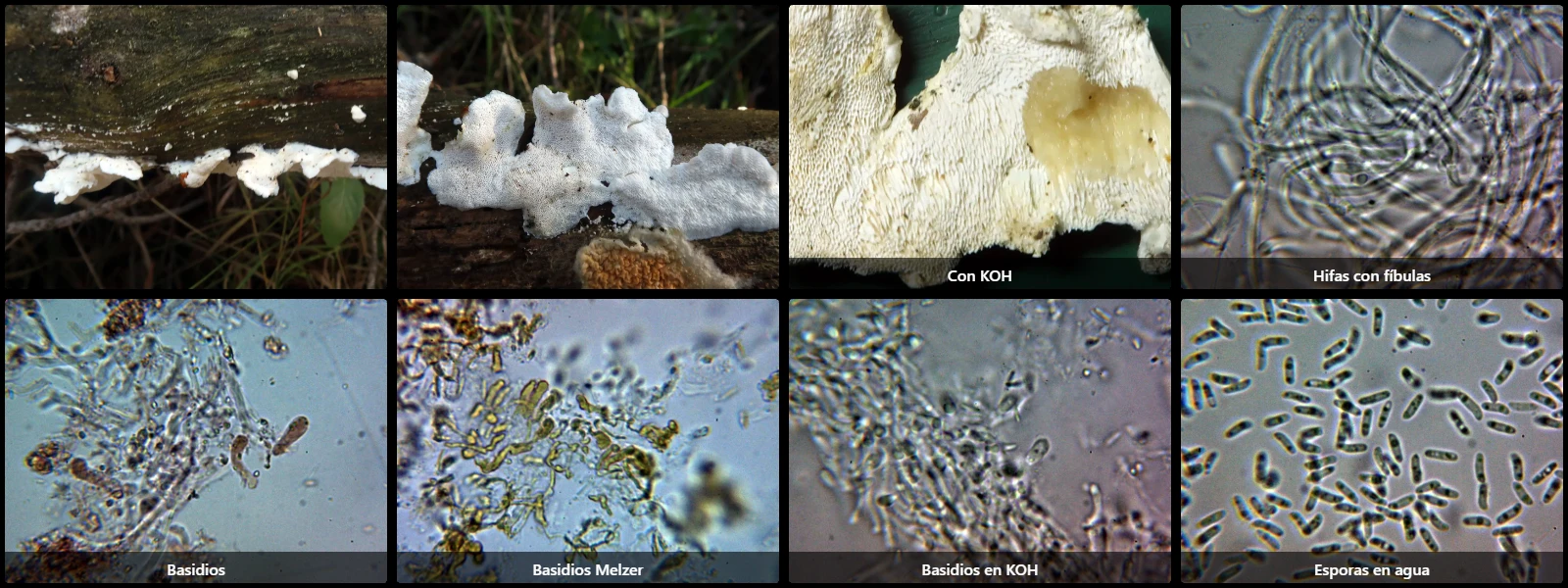
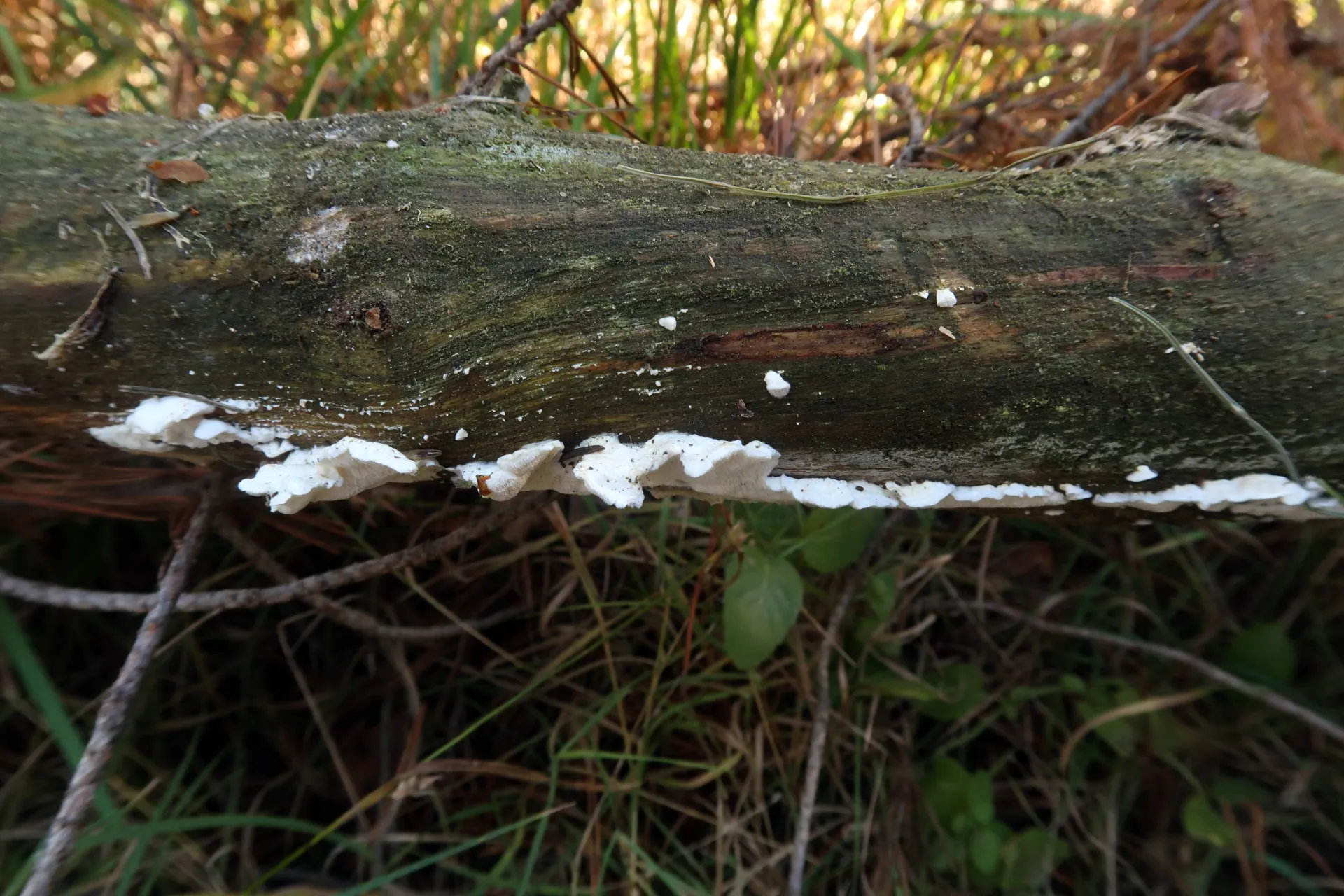
Basidiocarps resupinate to effused with a narrow pileate ledge, up to 1 mm thick, white to cream, with 3–5 pores per mm, circular to angular and tending to become lacerate with development.
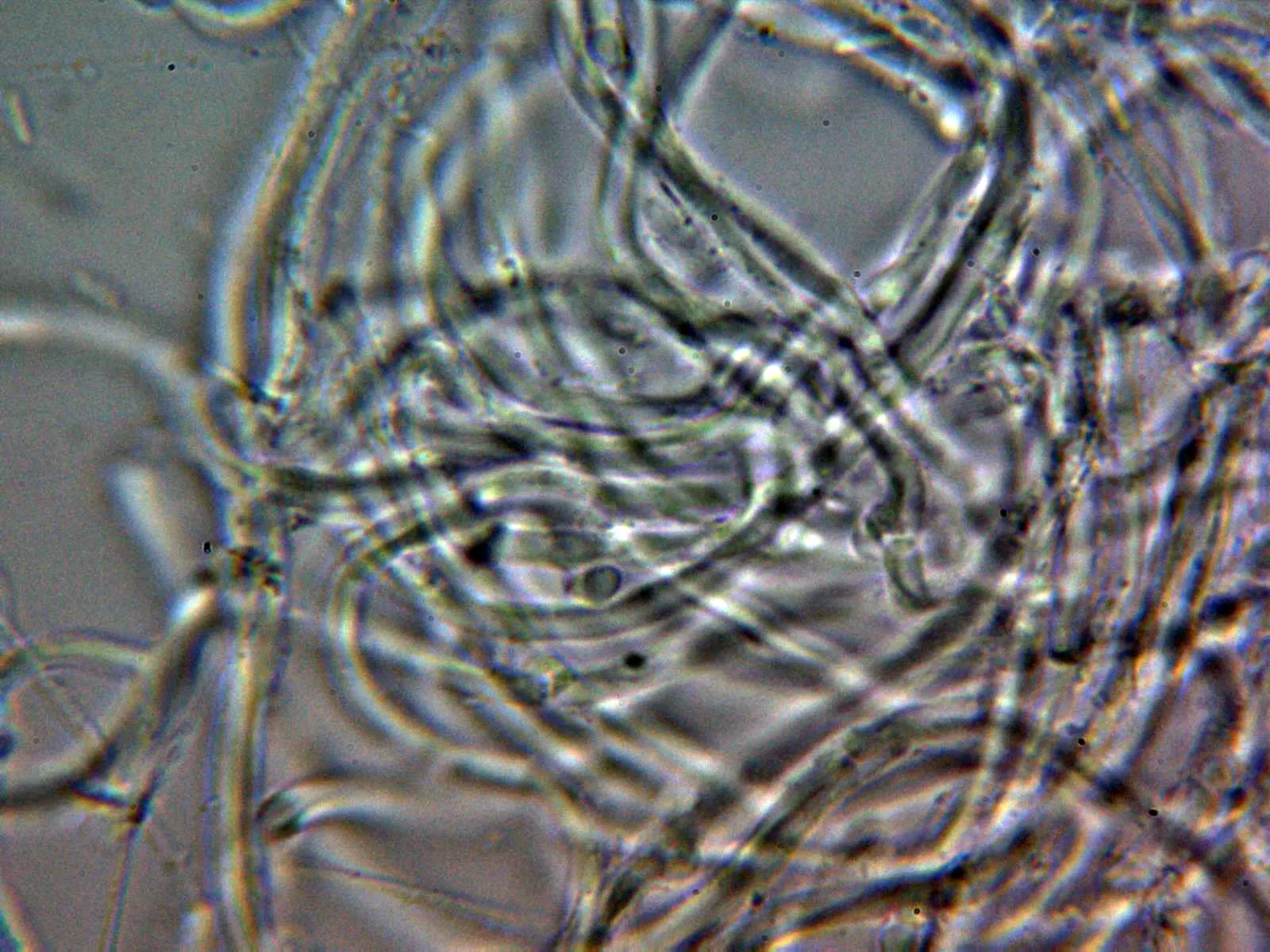
Monomitic hyphal system, composed exclusively of hyaline, thin-walled, sparsely branched generative hyphae 2.5–4 µm wide, septate and with prominent clamp connections at the septa.
Cystidia or other sterile elements absent.
Basidia clavate, 12–17 µm long by 4–6 µm wide, with basal clamps, 4-spored.
Spores cylindrical to slightly allantoid, smooth, hyaline, thin-walled, measuring 5.5–7 µm long by 1.6–2 µm wide, containing small oil guttules inside, inamyloid in Melzer's reagent.
Geographic references
Map generated from global occurrence data from GBIF. GBIF.
Study measurements
Values in Microns (µm)Macroscopic gallery
Microscopic gallery