


Collybiopsis ramealis
(Bull.) Millsp.
Study description
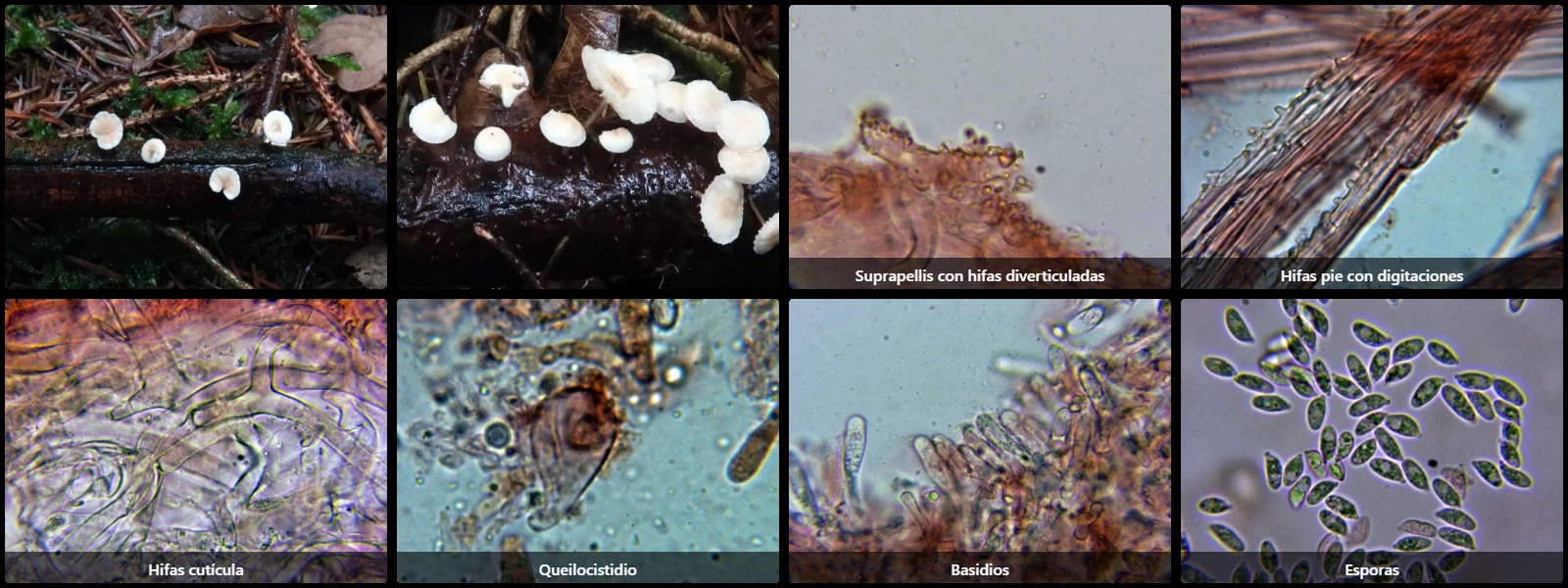
General: Formerly known as Marasmiellus ramealis, saprotrophic on fallen twigs and woody debris, pileus hemispherical to convex-flattened, 5-18 mm diam., lamellae anastomosed, stipe whitish with a reddish-brown base, odor indistinct, taste slightly bitter.
Pileipellis: Composed of branched filamentous hyphae 5-10 µm wide with diverticulate terminal elements, septate with clamp connections.
Cheilocystidia: Clavate, vesiculose, 27-40 x 15-20 µm, bearing short apical diverticula/protuberances.
Basidia: Cylindric-clavate, 25-30 x 5-6 µm, with basal clamp connections, 2- or 4-spored.
Spores: Ellipsoid to fusiform, smooth, hyaline, thin-walled, pointed at apicular pole, 6.5-9.5 x 3.5-4 µm, containing small oil guttules.
Pileipellis: Composed of branched filamentous hyphae 5-10 µm wide with diverticulate terminal elements, septate with clamp connections.
Cheilocystidia: Clavate, vesiculose, 27-40 x 15-20 µm, bearing short apical diverticula/protuberances.
Basidia: Cylindric-clavate, 25-30 x 5-6 µm, with basal clamp connections, 2- or 4-spored.
Spores: Ellipsoid to fusiform, smooth, hyaline, thin-walled, pointed at apicular pole, 6.5-9.5 x 3.5-4 µm, containing small oil guttules.
Geographic references
Map generated from global occurrence data from GBIF. GBIF.
Study measurements
Values in Microns (µm)Macroscopic gallery
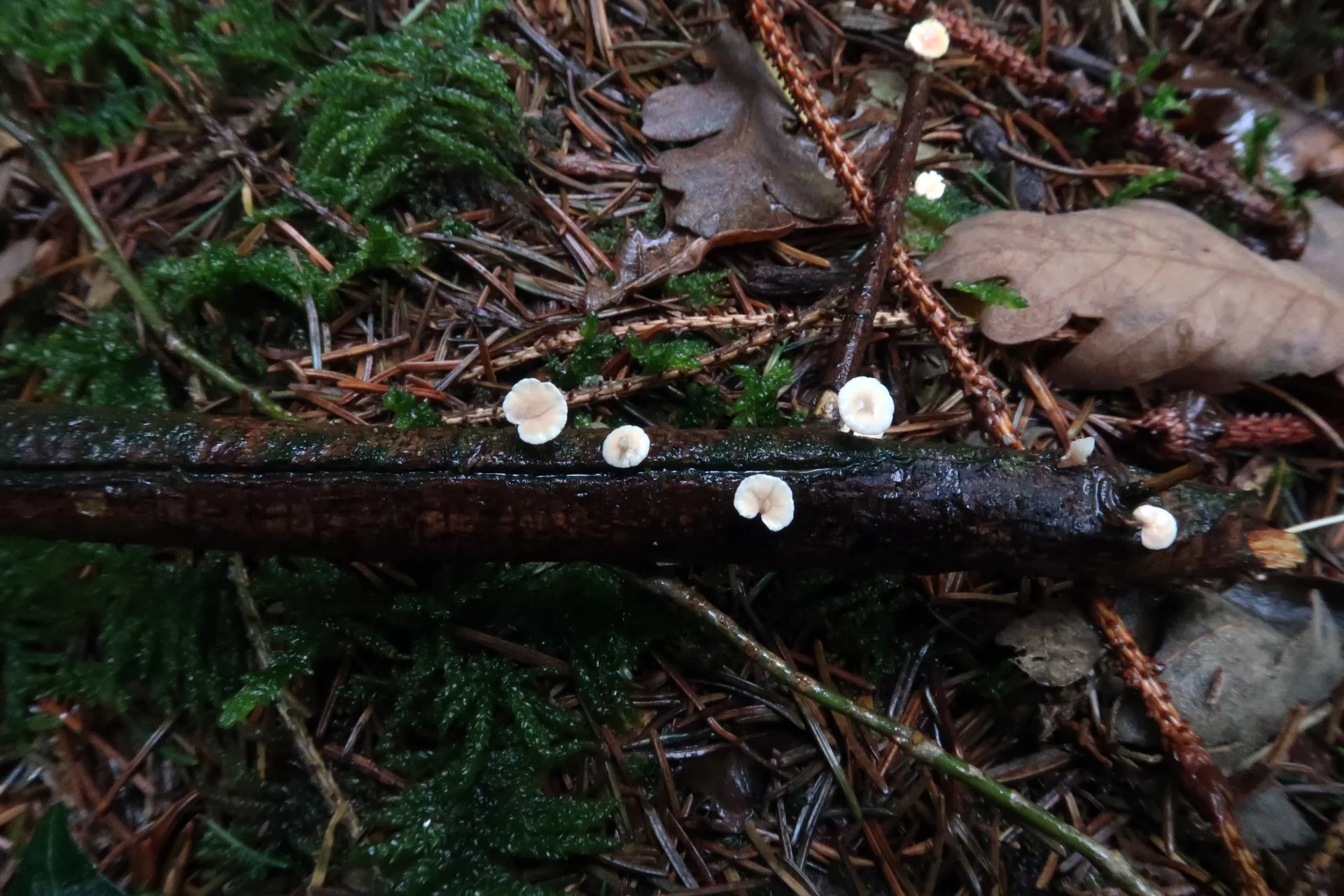
1 / 7Collybiopsis ramealis - 1 - IMG_1862
Microscopic gallery
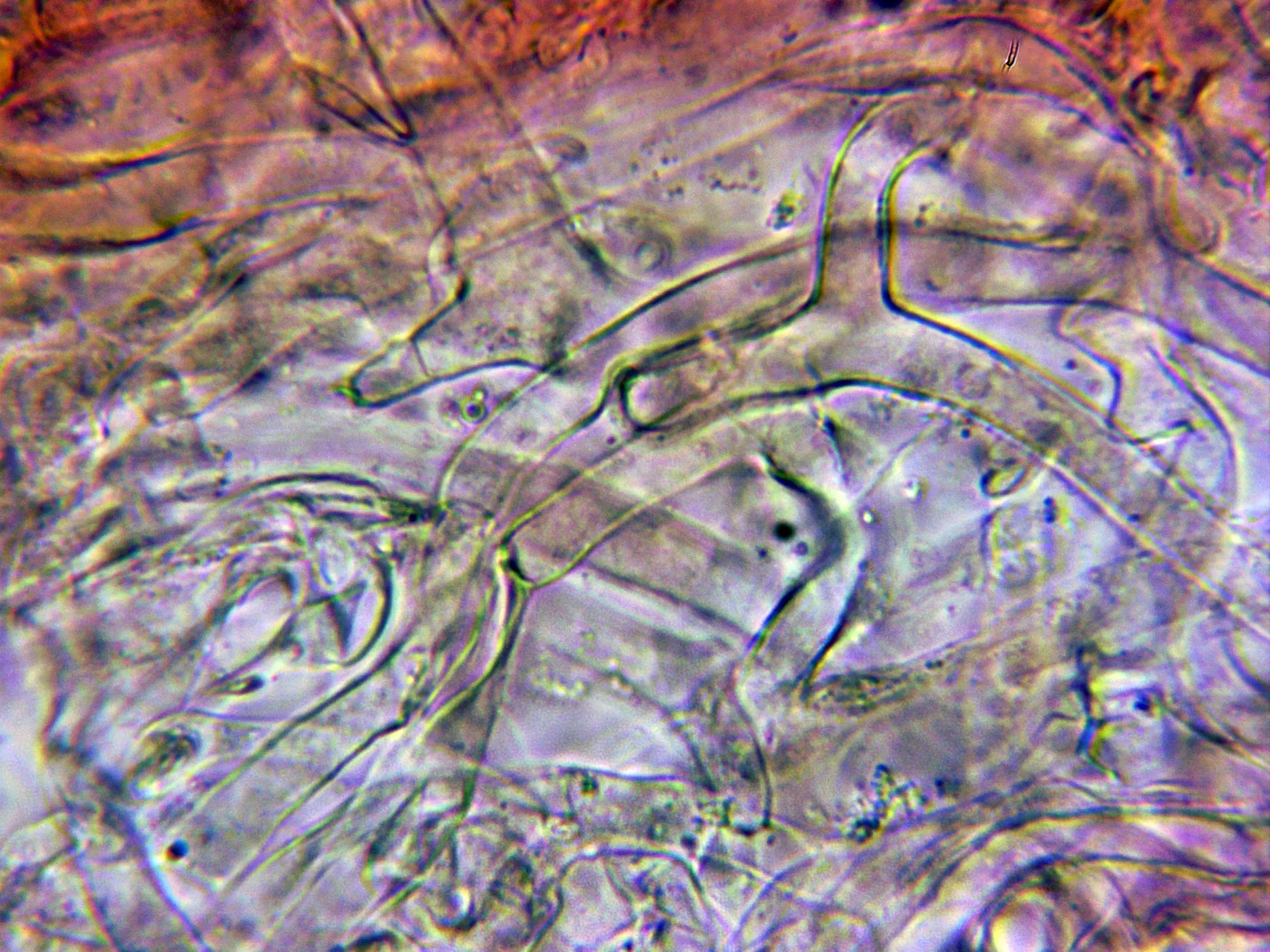
1 / 23Collybiopsis ramealis - 10 - Hifas gruesas subpellis