Byssocorticium atrovirens
(Fr.) Bondartsev & Singer
Study description
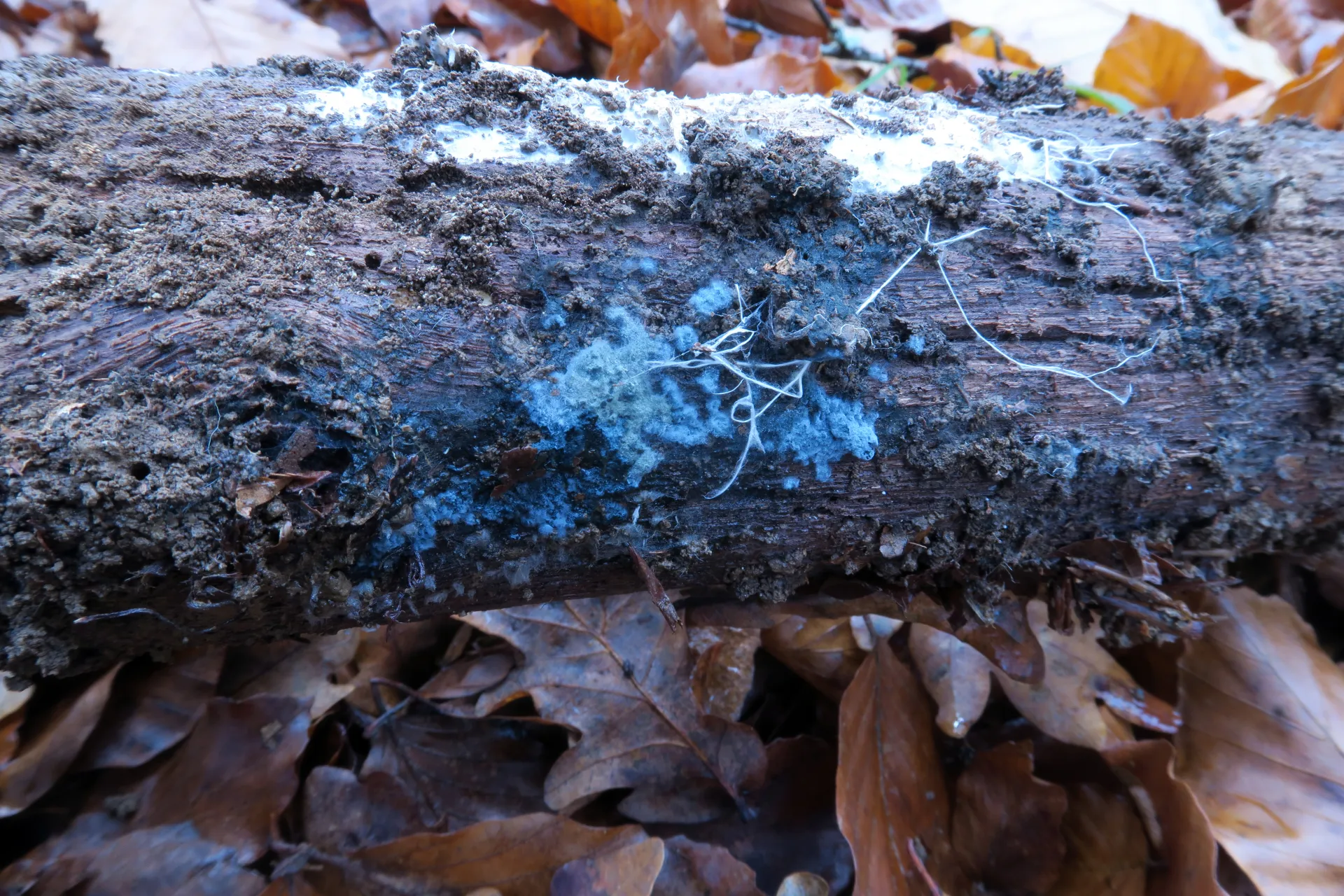
On decaying wood or bark on the ground in advanced decay, with resupinate basidiomes forming isolated irregular patches up to 5 cm long, deep blue when fresh to pale blue when dry, cottony in consistency, very thin, and with poorly defined growth margins.
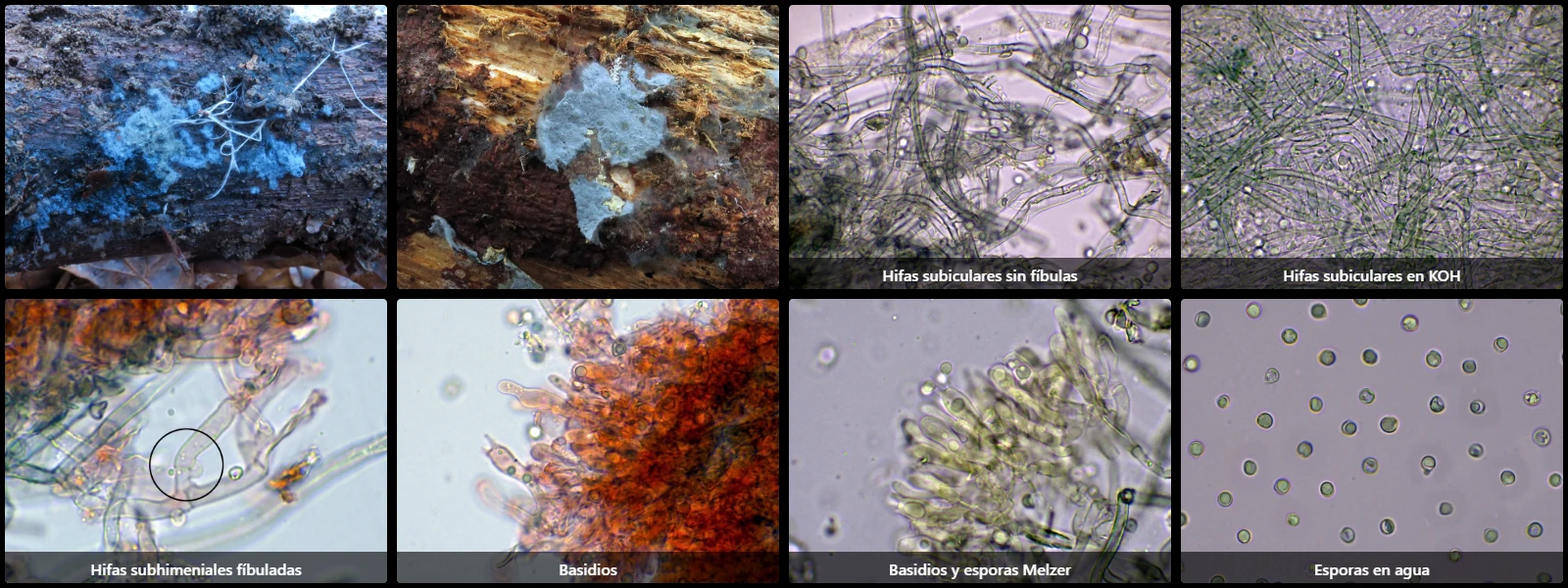
Hyphal system monomitic, with subicular hyphae thin- to slightly thick-walled, 2 to 3 µm wide, with faint bluish pigment inside, with abundant right-angled branchings, septate with simple septa (without clamp connections).
Subhymenial hyphae hyaline, slightly wider than subicular hyphae, 2.5 to 3.5 µm wide, septate, and in this case the septa generally bear distinct clamp connections.
Cystidia and other sterile hymenial elements absent.
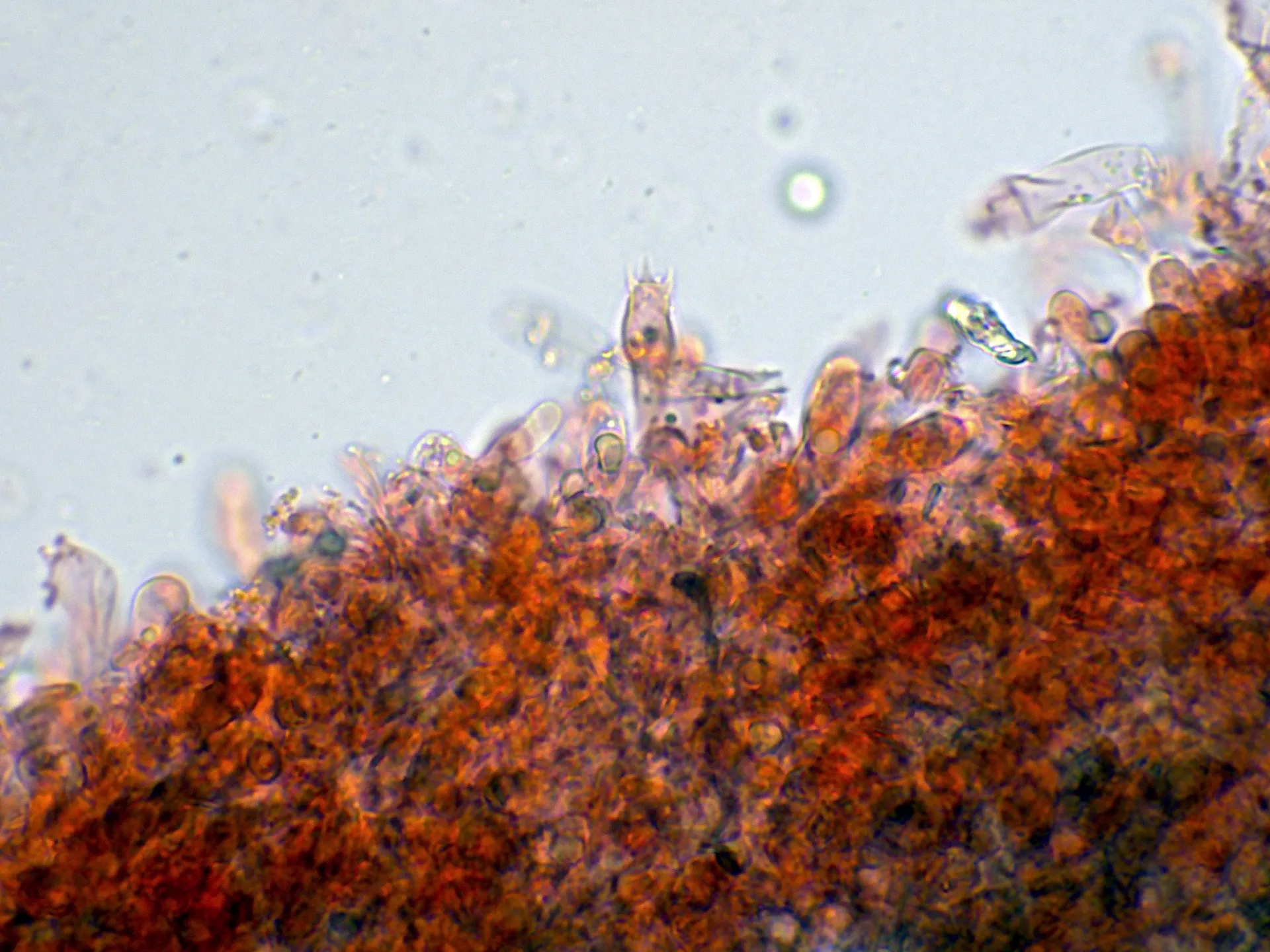
Basidia clavate, 18 to 26 µm long, 4.5 to 6 µm wide, with basal clamp connections and four-spored.
Spores globose to subglobose, smooth, hyaline, thin-walled, 3 to 5 µm long, 3 to 4.5 µm wide, with a prominent apiculus at one end, containing a large oil droplet inside, and inamyloid in Melzer's reagent.
Herbarium material available: JTP2679/25.
Geographic references
Map generated from global occurrence data from GBIF. GBIF.
Study measurements
Values in Microns (µm)Macroscopic gallery
Microscopic gallery