Britzelmayria multipedata
(Peck) D.Wächt. & A.Melzer
Study description
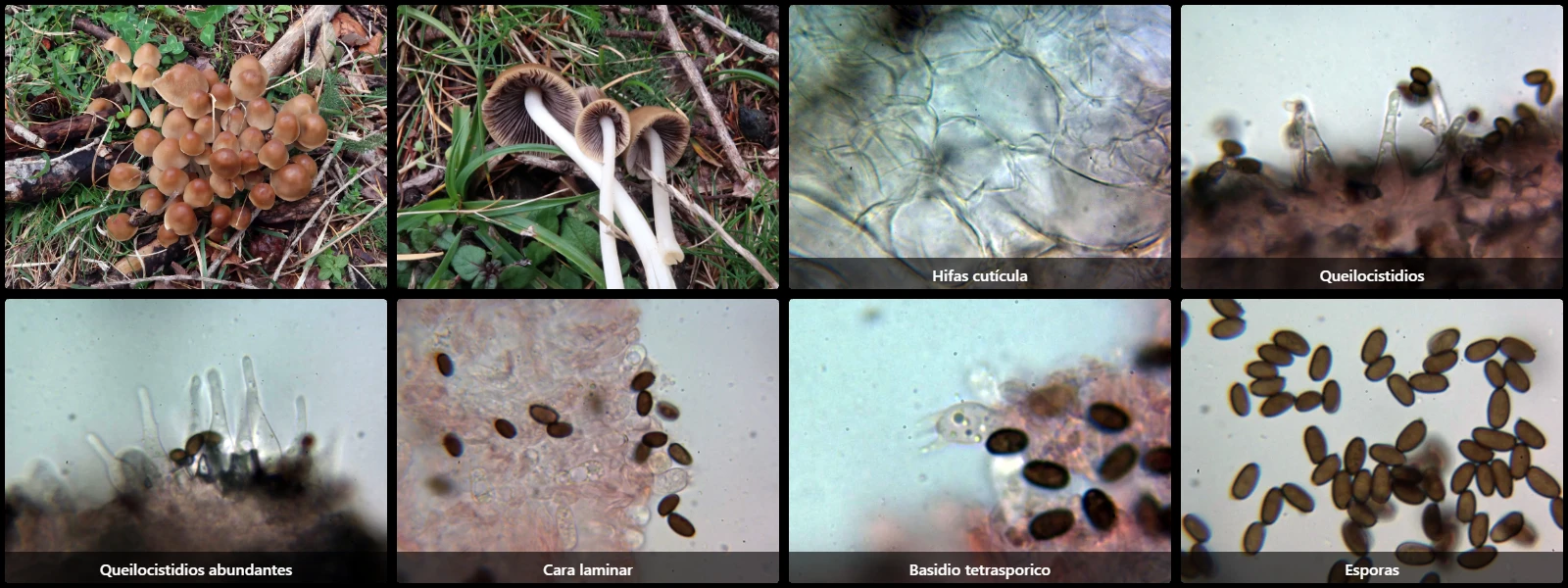
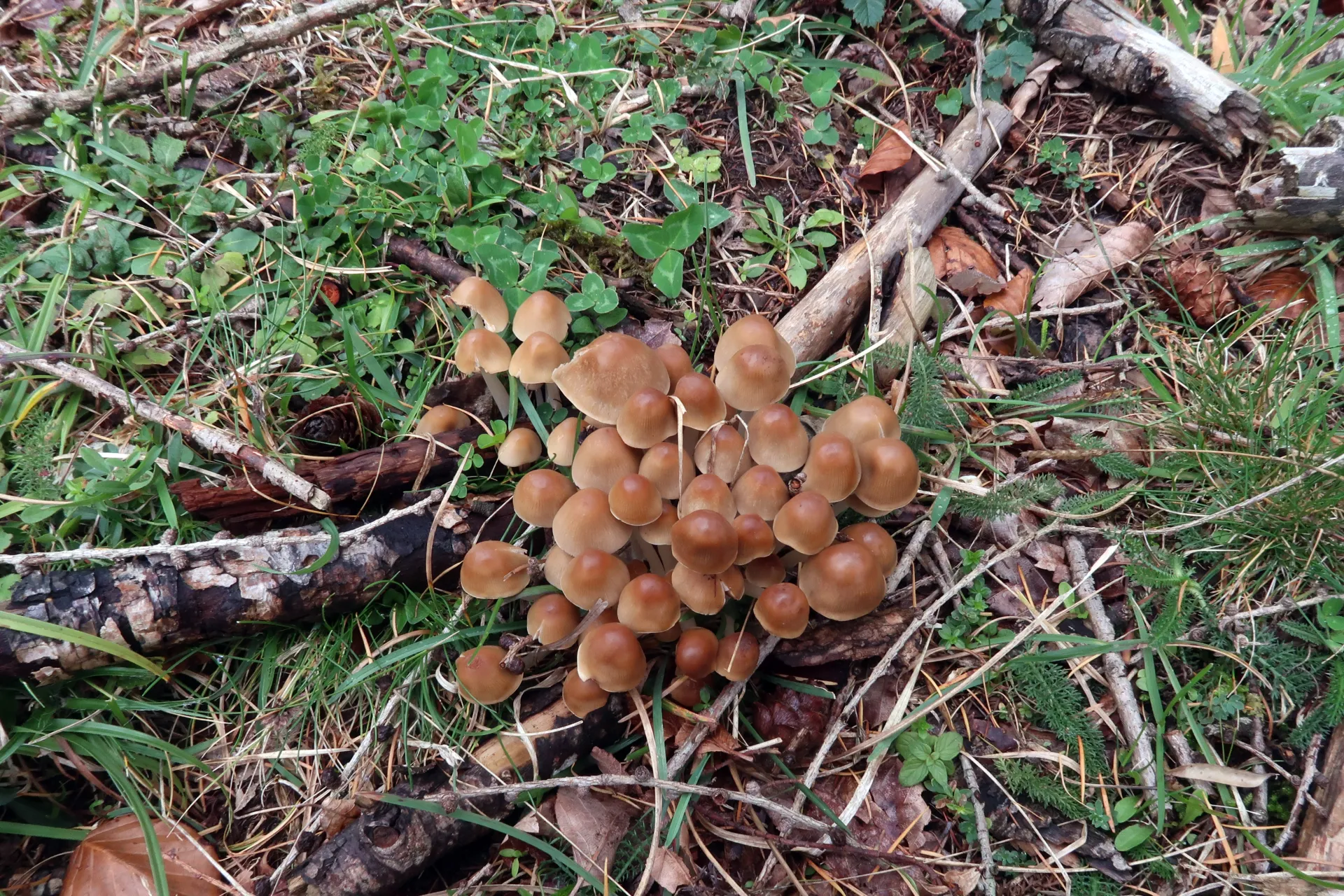
Formerly known as Psathyrella multipedata, growing in dense caespitose clusters of up to 60 or 70 basidiomes with fused stipes, with a hemispherical to conical-campanulate pileus 1 to 2.5 cm across, ochraceous-brown with whitish radial fibrils, adnate purplish-brown lamellae from sporulation, a cylindrical whitish stipe joined in dense fascicles, odour indistinct, and insipid taste.
Pileipellis cellular, composed of pyriform to clavate, virtually hyaline cells 30 to 40 µm long and 10 to 25 µm wide.
Cheilocystidia abundant, lageniform, thin-walled, with an elongated neck, 30 to 50 µm long and 8 to 12 µm wide.
Pleurocystidia present only near the gill edge (paracystidia), similar to cheilocystidia but shorter, 20 to 35 µm long and 7 to 12 µm wide.
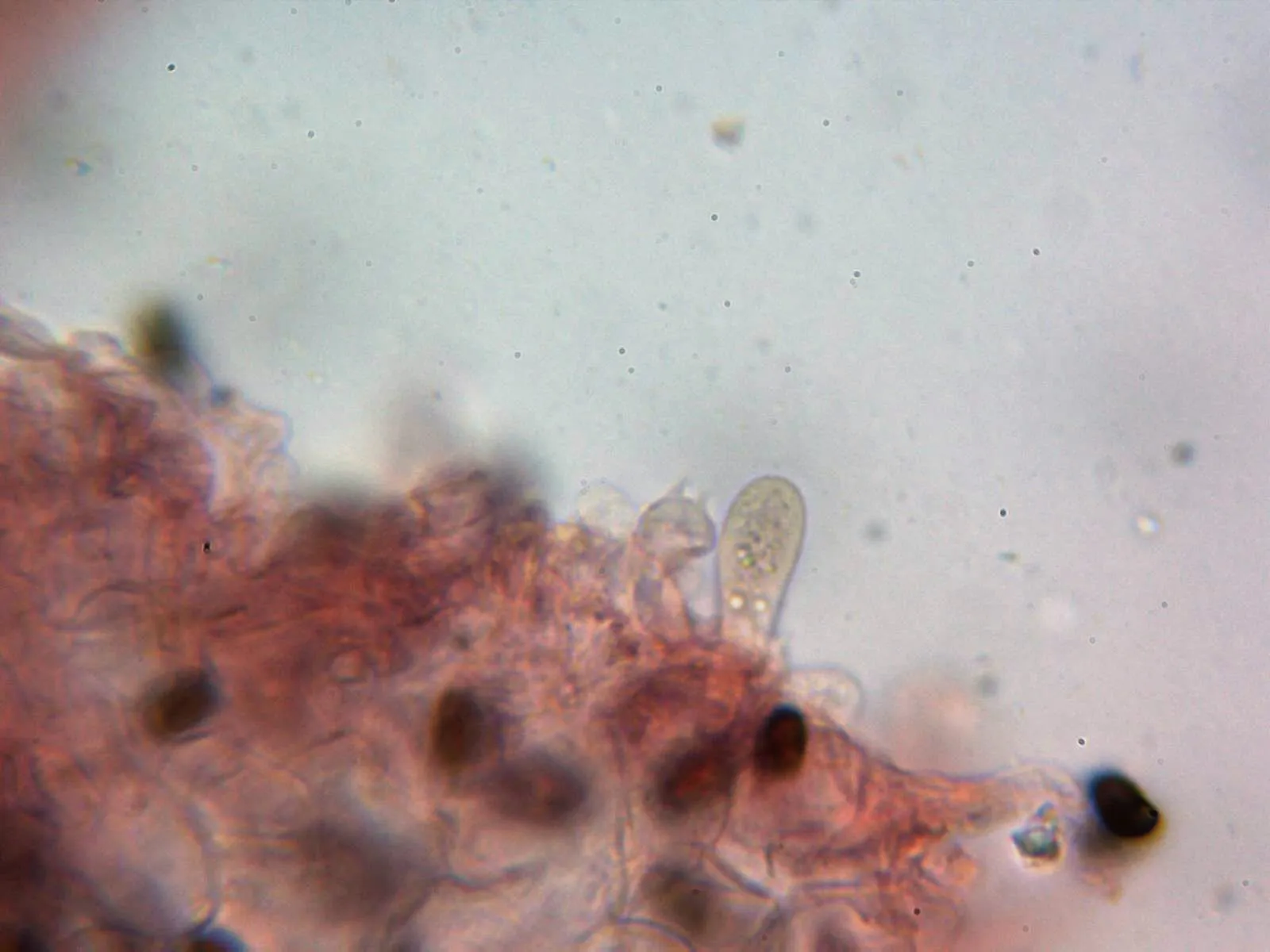
Basidia clavate, 20 to 30 µm long, 7 to 9 µm wide, clampless at the base, 4-spored.
Spores ellipsoidal, smooth- and moderately thick-walled, reddish-brown under the microscope, 6.5 to 8.5 µm long, 3.5 to 4.5 µm wide, with an inconspicuous hyaline apiculus at one pole and a distinct germ pore at the opposite pole.
Geographic references
Map generated from global occurrence data from GBIF. GBIF.
Study measurements
Values in Microns (µm)Macroscopic gallery
Microscopic gallery