

Brachysporium polyseptatum
(Preuss) S.Hughes
Study description
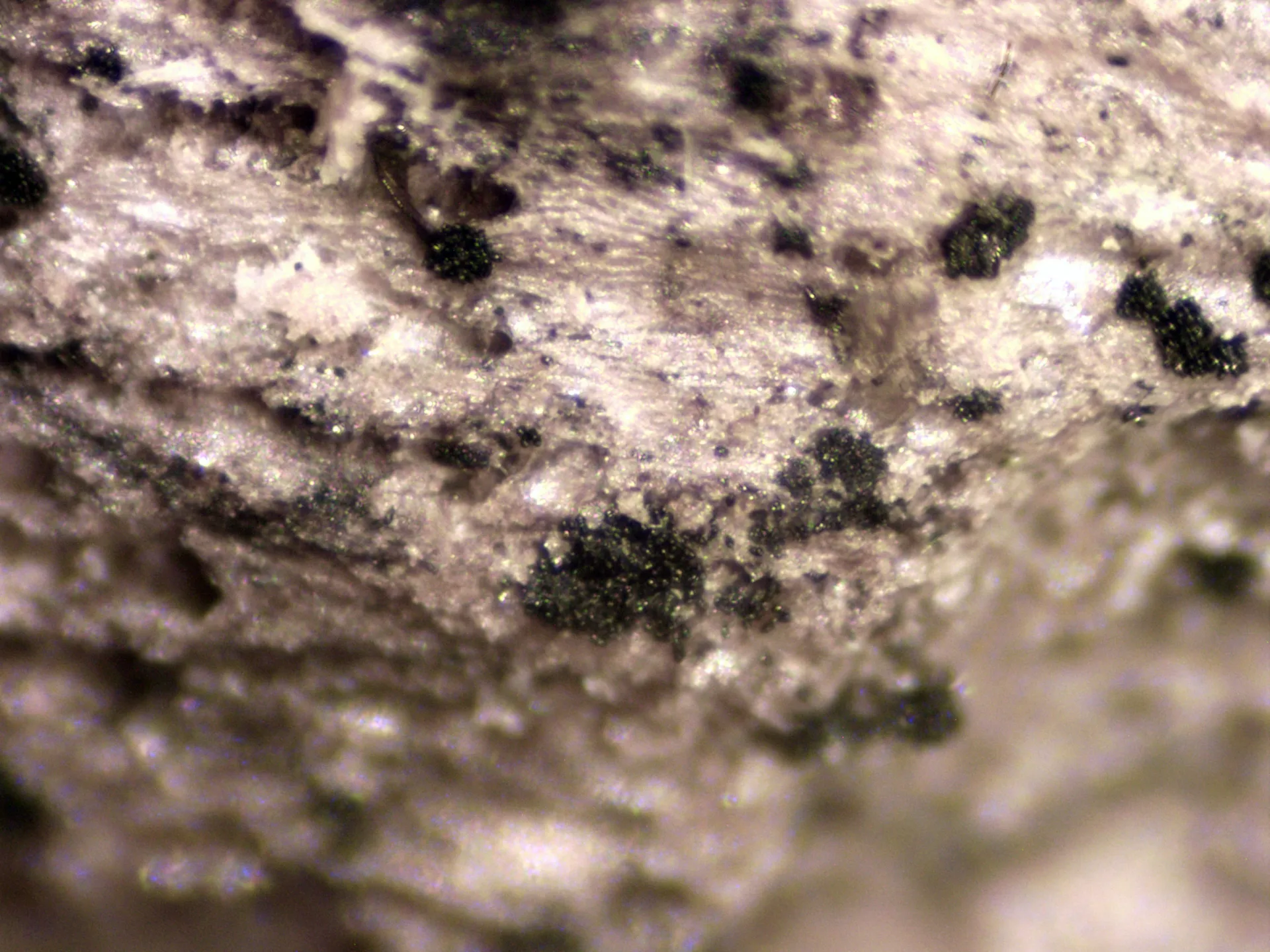
On very wet, decaying decorticated wood on the ground, known in its sexual or perfect stage as Cryptadelphia polyseptata, forming velvety colonies, very dark brown to black, with a mycelium deeply immersed in the substrate.
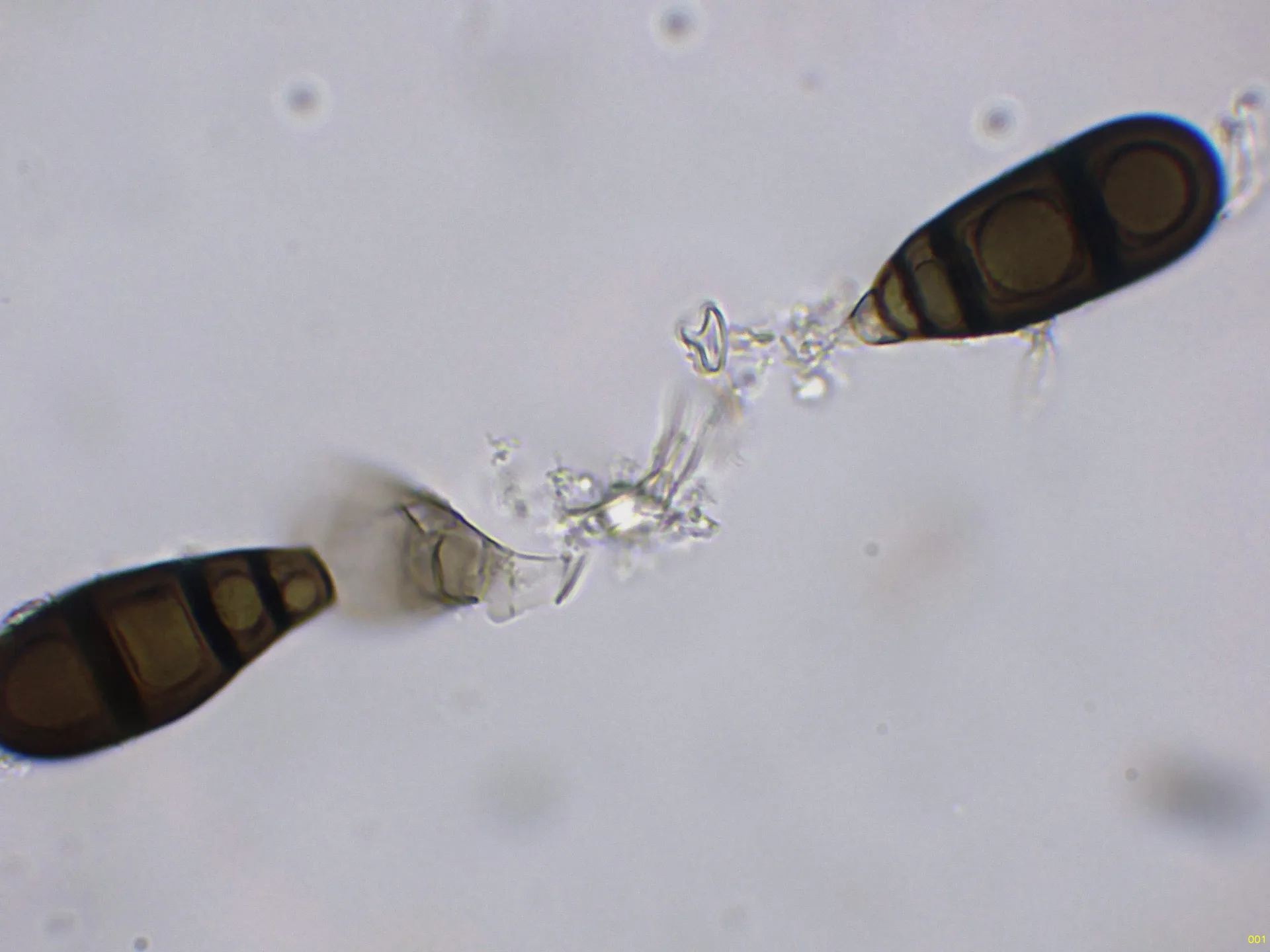
Conidial stage with erect, simple, unbranched, septate, thick-walled conidiophores.
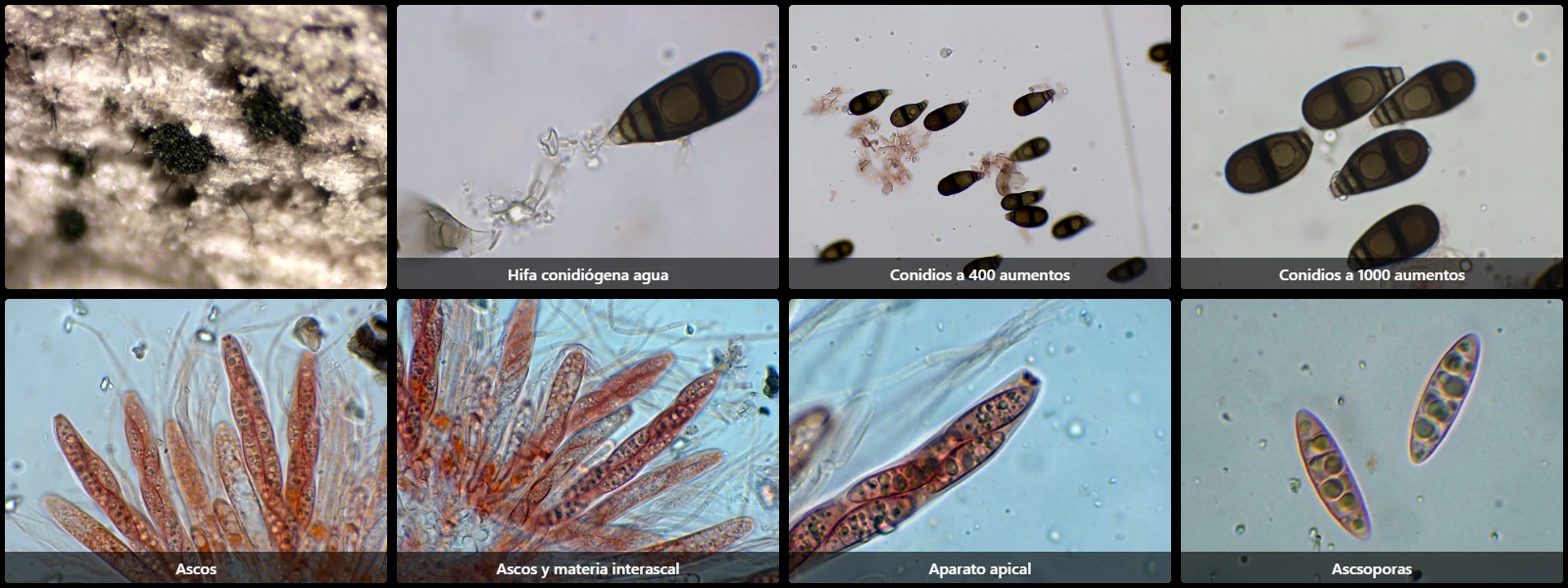
Conidia ellipsoidal, with one end more pointed, mostly with 4 transverse septa, brown under the microscope with more hyaline basal cells, 25 to 45 µm long by 14 to 20 µm wide.
Sexual or perfect stage with cylindrical to slightly fusiform, eight-spored (octosporic) asci, 90 to 120 µm long by 8 to 10 µm wide, with spore arrangement within the ascus uniseriate in the lower part to biseriate in the widest part, with a clearly visible refractive apical apparatus that stains with Congo Red and does not react with Melzer's reagent (inamyloid).
Interascal material resembling filiform, septate, hyaline paraphyses with some branching, 2 to 3 µm wide, slightly projecting above the level of the asci.
Ascospores fusiform, with one side slightly more flattened, smooth, hyaline, thin-walled, 18 to 25 µm long by 5 to 7 µm wide, mostly with 5 transverse septa, and with one or more oil drops in each cell.
Geographic references
Map generated from global occurrence data from GBIF. GBIF.
Study measurements
Values in Microns (µm)Macroscopic gallery
Microscopic gallery