Ascobolus crenulatus
P.Karst.
Study description
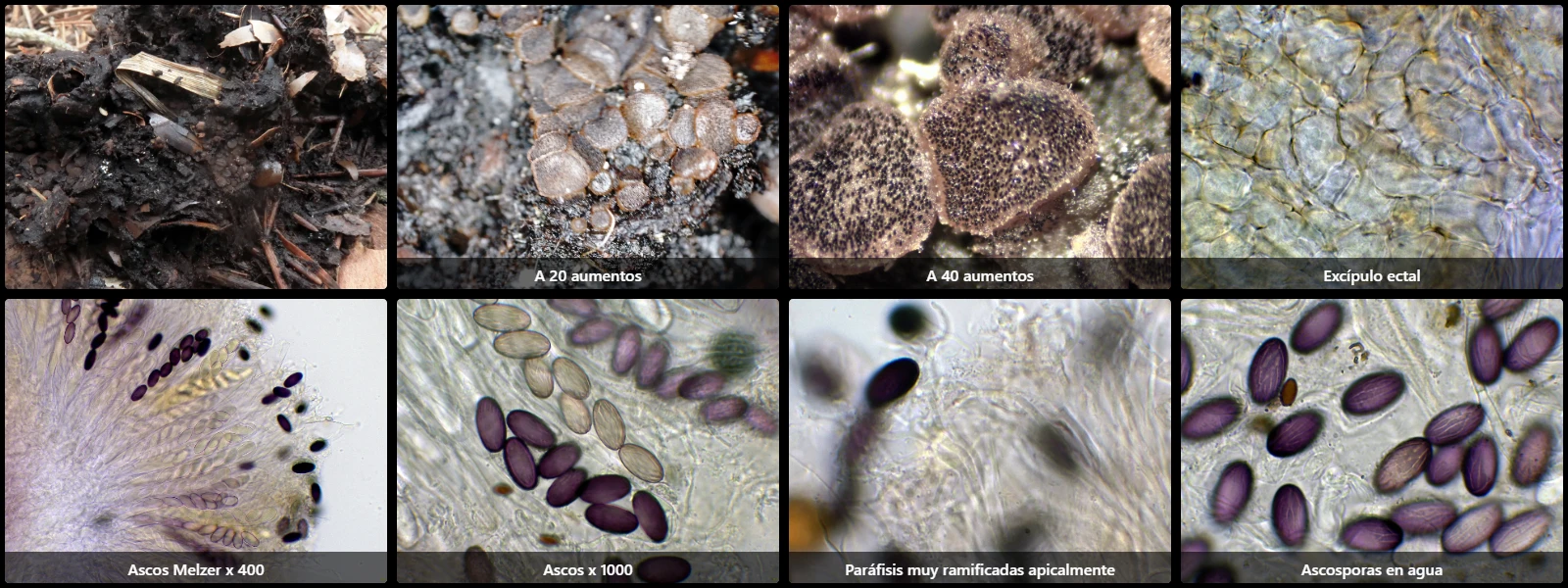
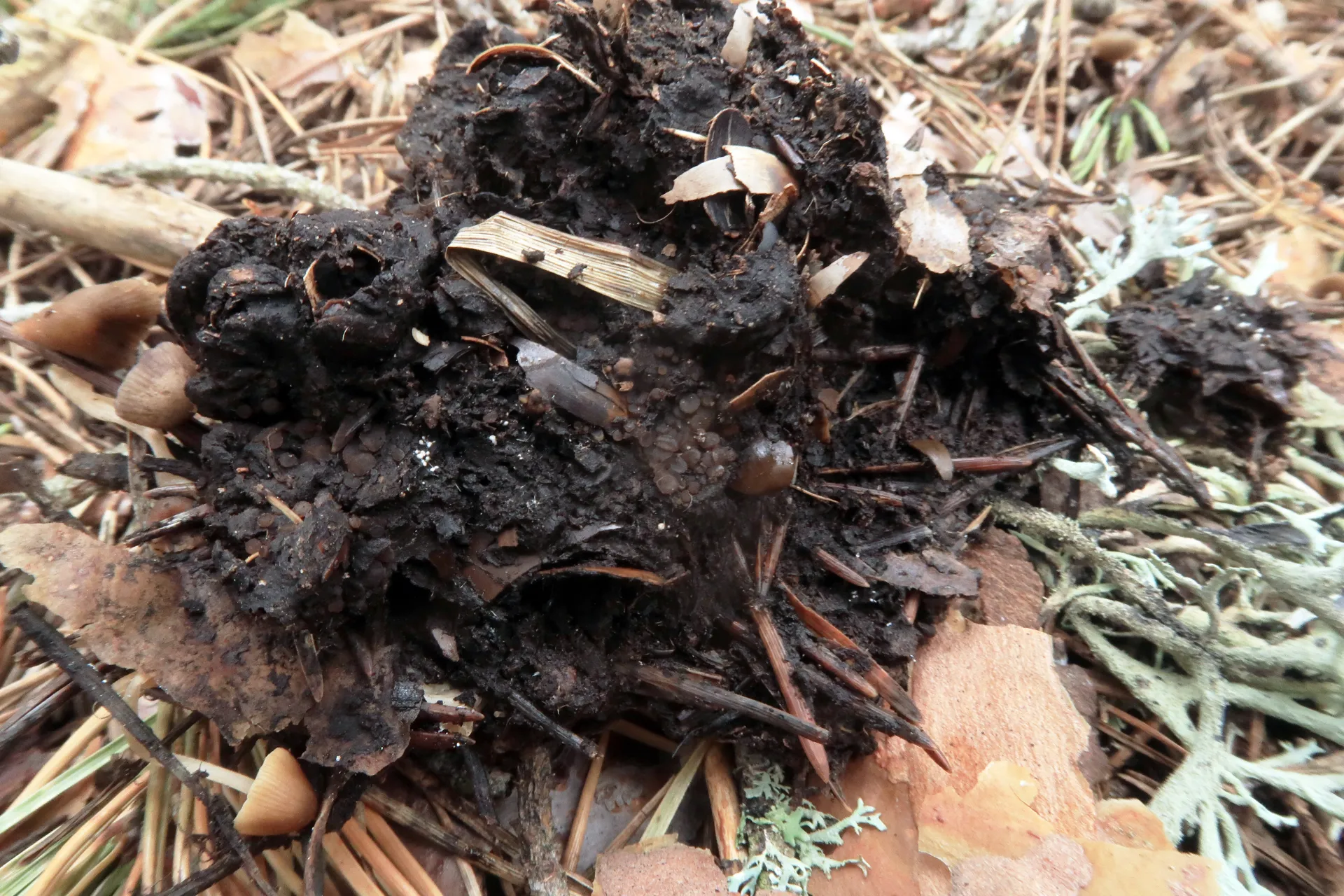
Growing exclusively on dung of herbivorous or omnivorous animals, with disc-shaped, sessile ascomata 1 to 2 mm in diameter, greenish yellow to brownish, dotted with minute black dots corresponding to the tips of the asci, and with a crenulate margin.
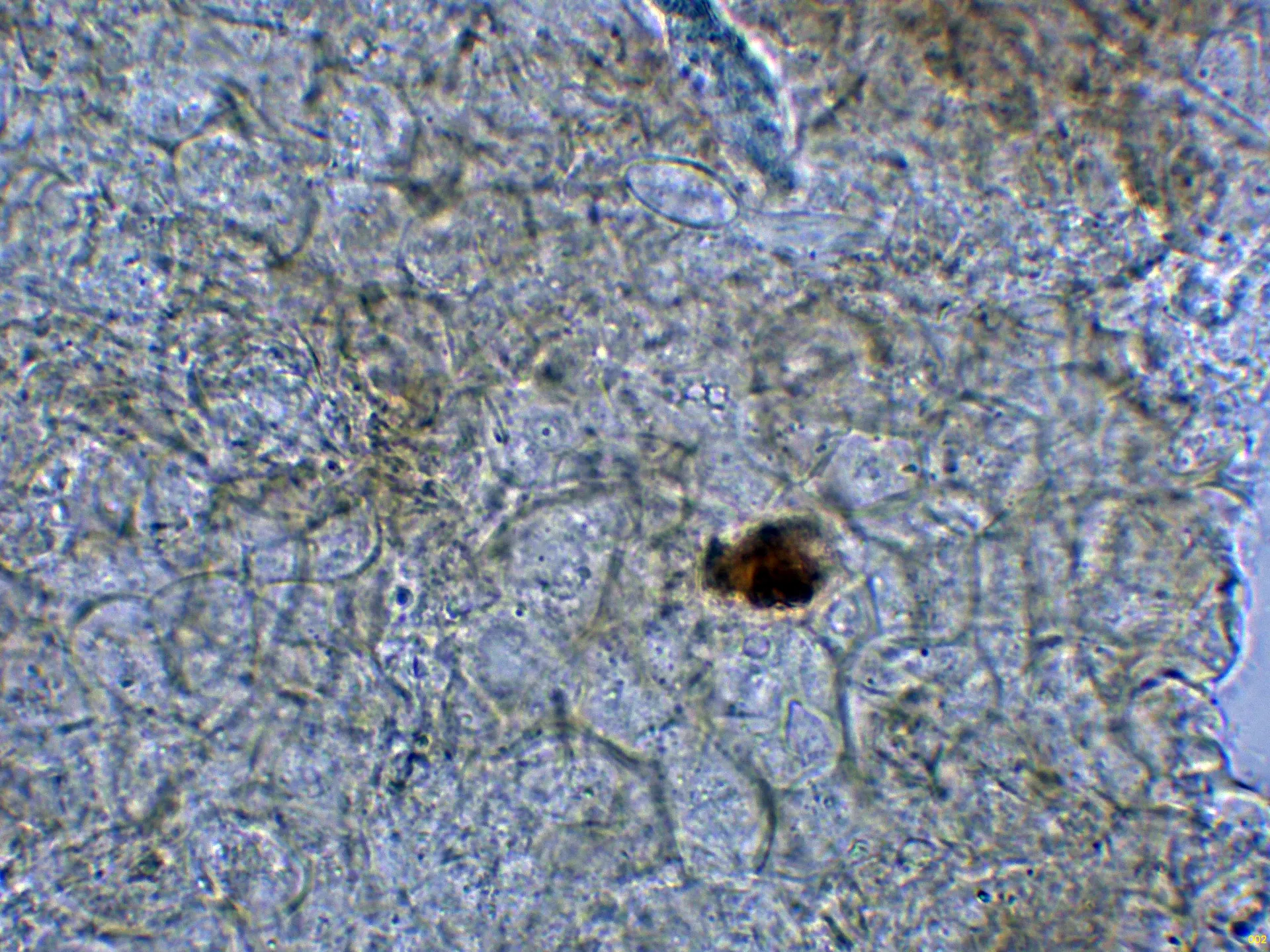
Ectal excipulum with hyphae of textura globulosa-angularis, hyaline, thin-walled, 15 to 35 µm in diameter.
Asci cylindrical-clavate, eight-spored, operculate, 130 to 155 µm long, 14 to 18 µm wide, with spore arrangement inside the ascus initially uniseriate, becoming biseriate at maturity, and inamyloid in Melzer's reagent.
Paraphyses filiform, hyaline, septate, very slender, 2 to 3 µm wide, frequently branched in the apical region, and exceeding the height of the asci.
Ascospores ellipsoidal, 16 to 19 µm long, 8 to 10 µm wide, changing with development from hyaline to dark violaceous brown, with longitudinal surface striae interconnected with each other (anastomosed).
A species very similar to Ascobolus furfuraceus, the latter lacking a crenulate margin and having much larger spores, according to literature 22–45 × 10–18 µm.
Herbarium material available: JTP2792/26.
Geographic references
Map generated from global occurrence data from GBIF. GBIF.
Study measurements
Values in Microns (µm)Macroscopic gallery
Microscopic gallery