

Amanita brunneofuliginea
Zhu L.Yang
Study description
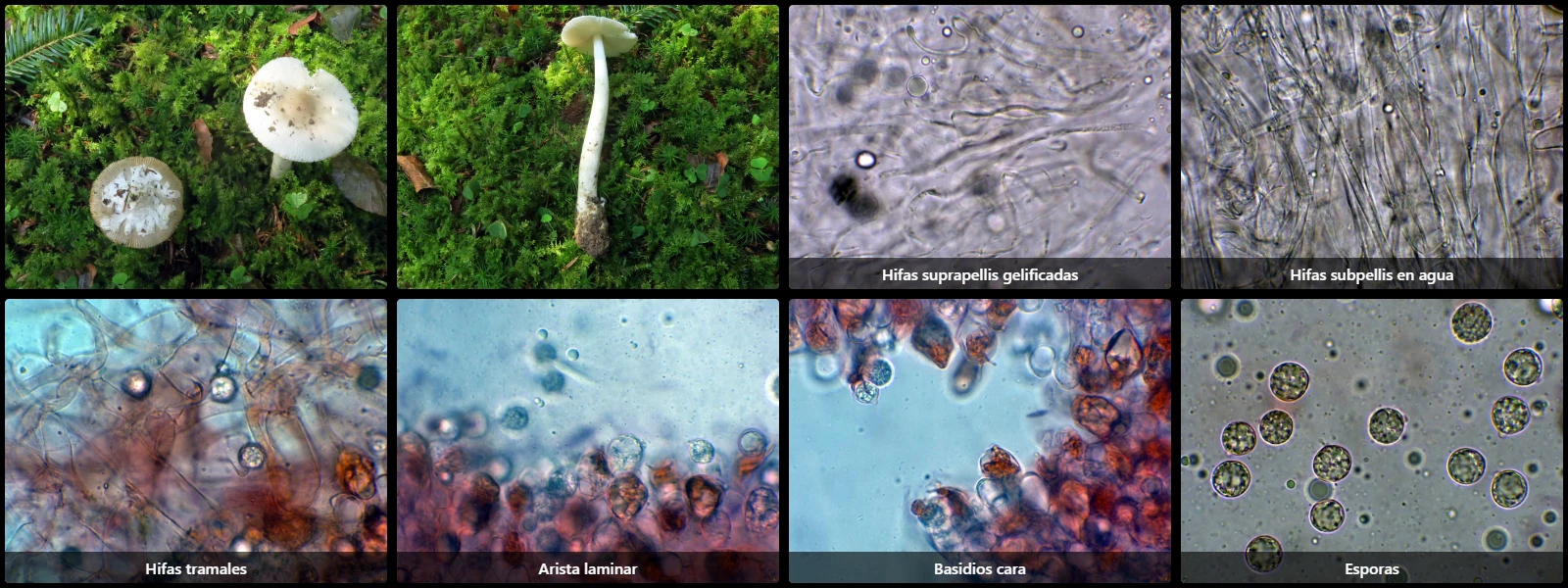
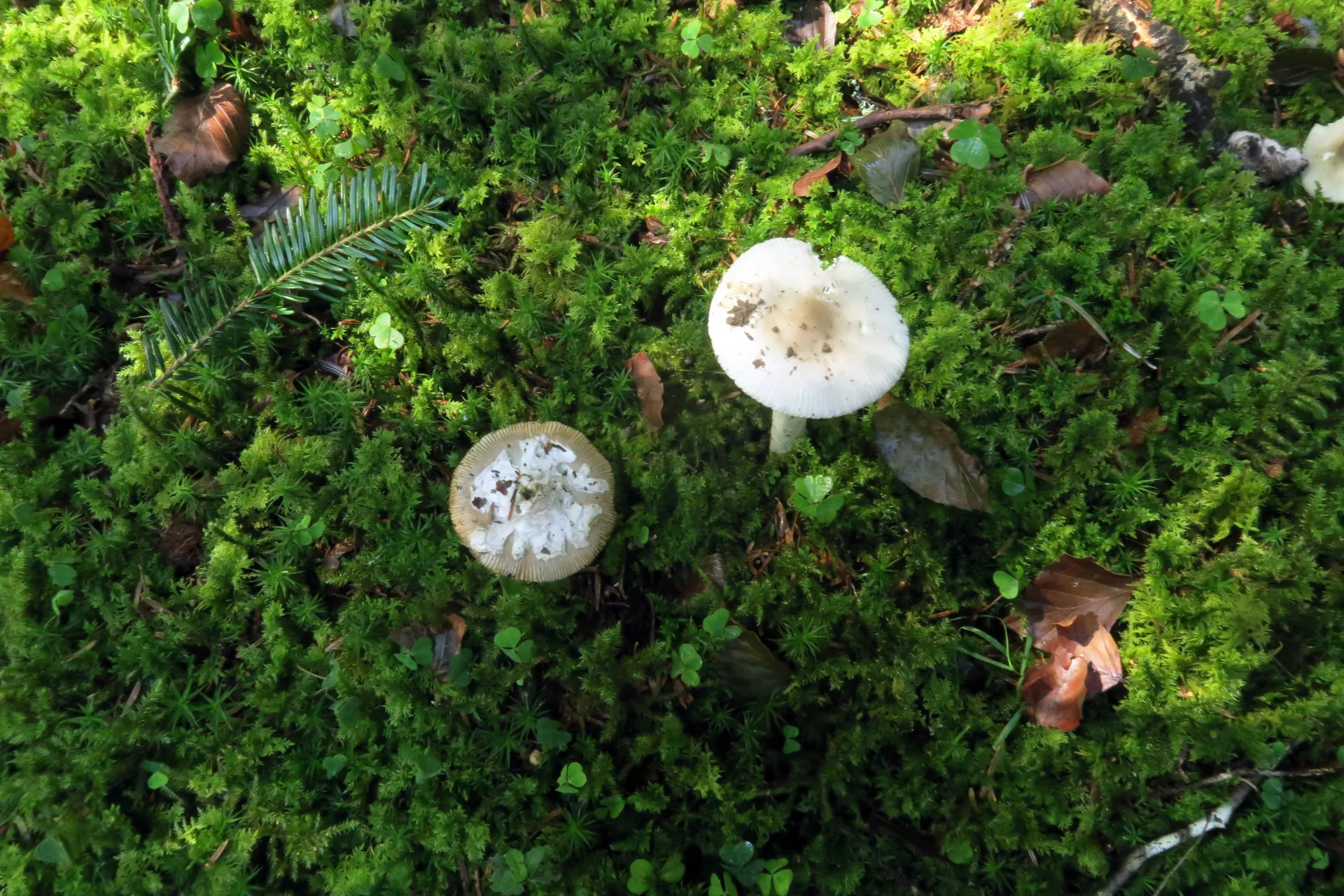
Species typical of conifers, especially firs, with a convex to flattened cap, 5 to 12 cm in diameter, with a smooth brown to beige surface, often with irregular ochraceous patches, free white gills, a whitish subcylindrical stipe without a ring, and a whitish volva ornamented with characteristic ochre-brown spots.
Pileipellis with an upper layer of filamentous hyphae widely separated from each other by gelification, hyaline, 2 to 3 µm wide, and beneath these more compacted hyphae arranged more or less parallel, likewise hyaline, 3 to 6 µm wide, all septate with simple septa (without clamp connections).
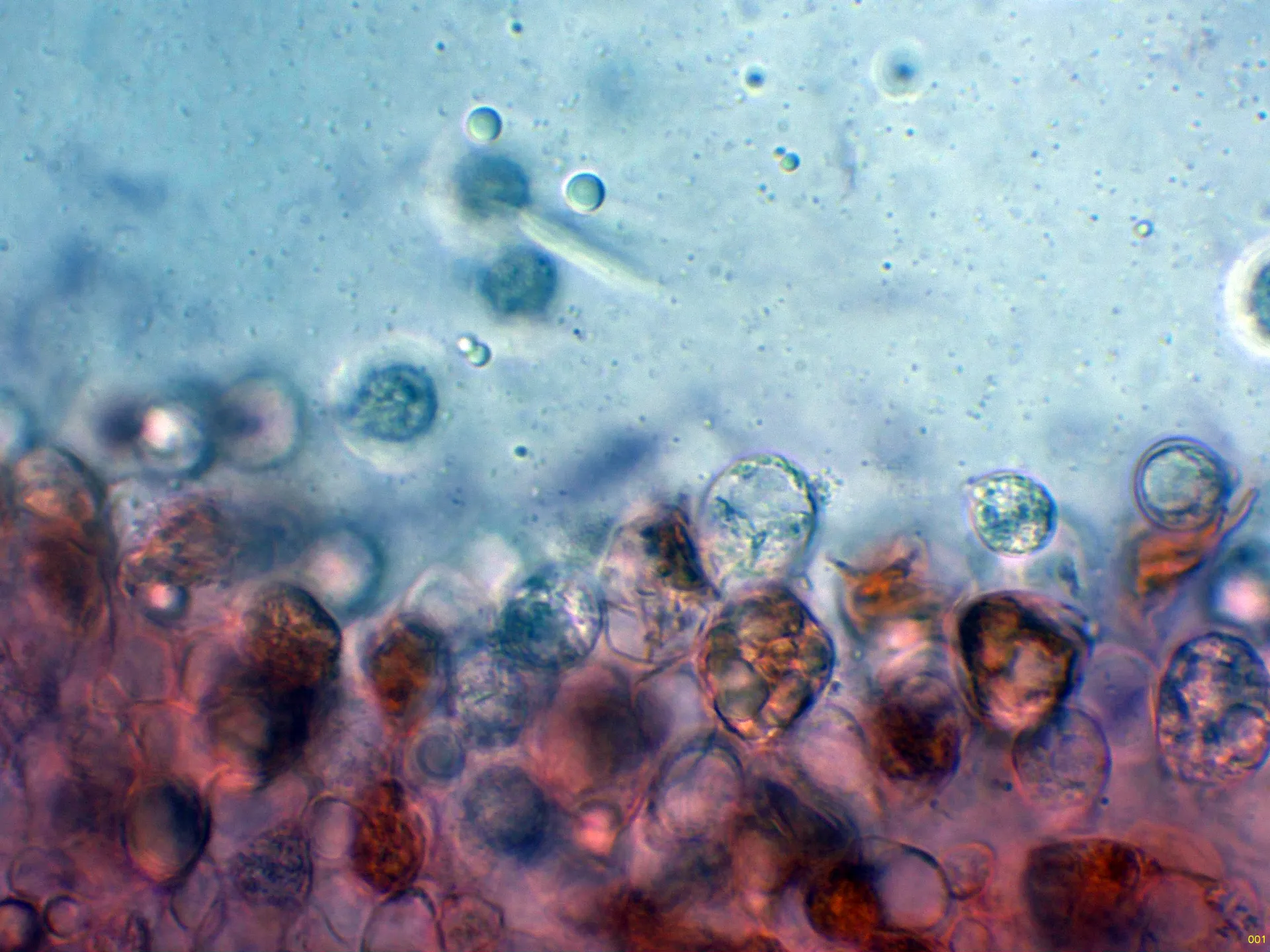
Gill edge fertile, without elements differentiated from basidia or basidioles.
Lamellar trama bilateral and divergent.
Basidia clavate, 50 to 65 µm long by 12 to 15 µm wide, with a simple base and predominantly tetrasporic.
Spores globose to subglobose, smooth, hyaline, thin-walled, with an indistinct apiculus at one end, 9.5 to 11.5 µm long by 8.5 to 11 µm wide, with a dense content of oil drops of varying sizes inside, and inamyloid in Melzer's reagent.
Herbarium material available: JTP2822/26.
Geographic references
Map generated from global occurrence data from GBIF. GBIF.
Study measurements
Values in Microns (µm)Macroscopic gallery
Microscopic gallery