Inonotus cuticularis
(Bull.) P.Karst.
Study description
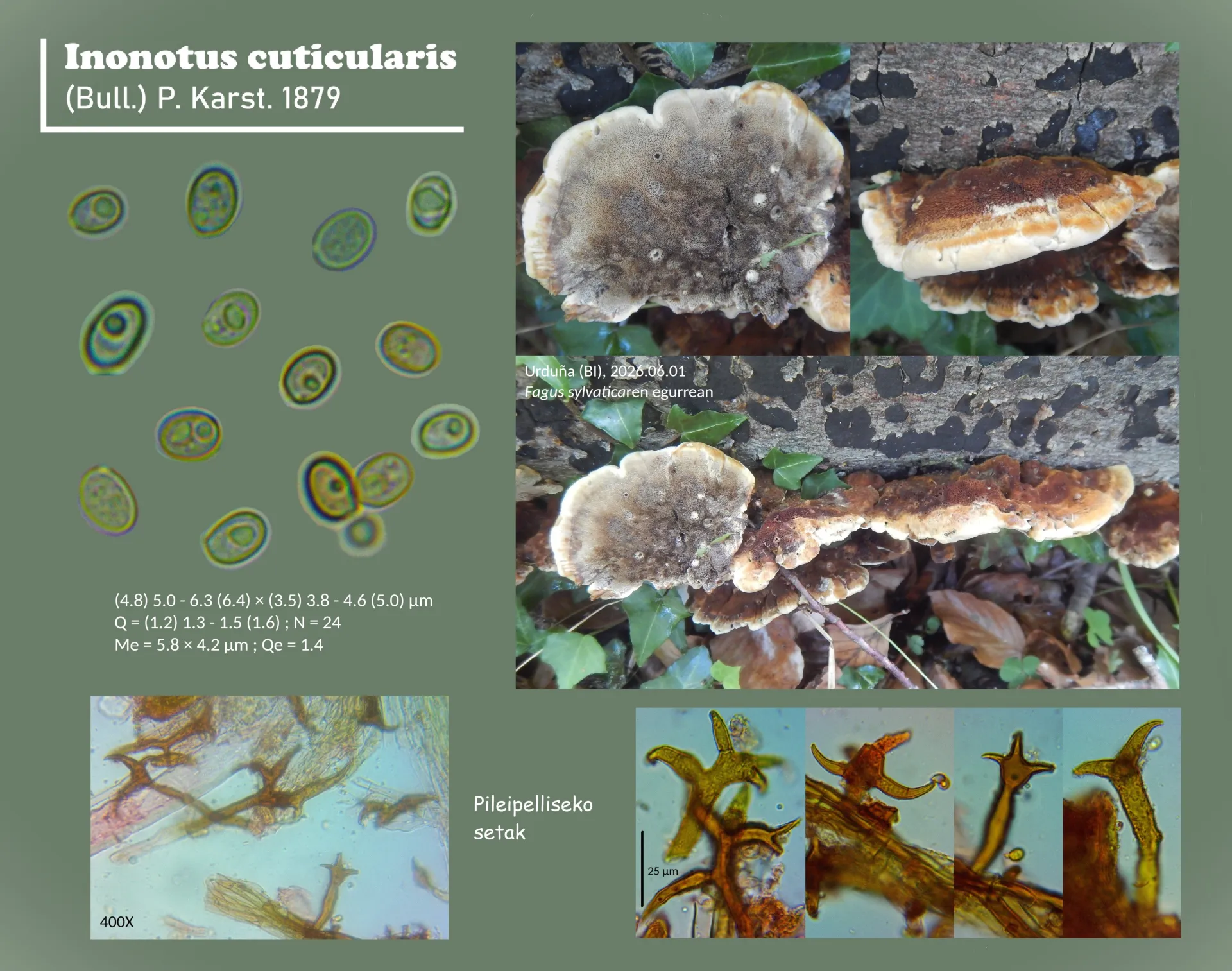
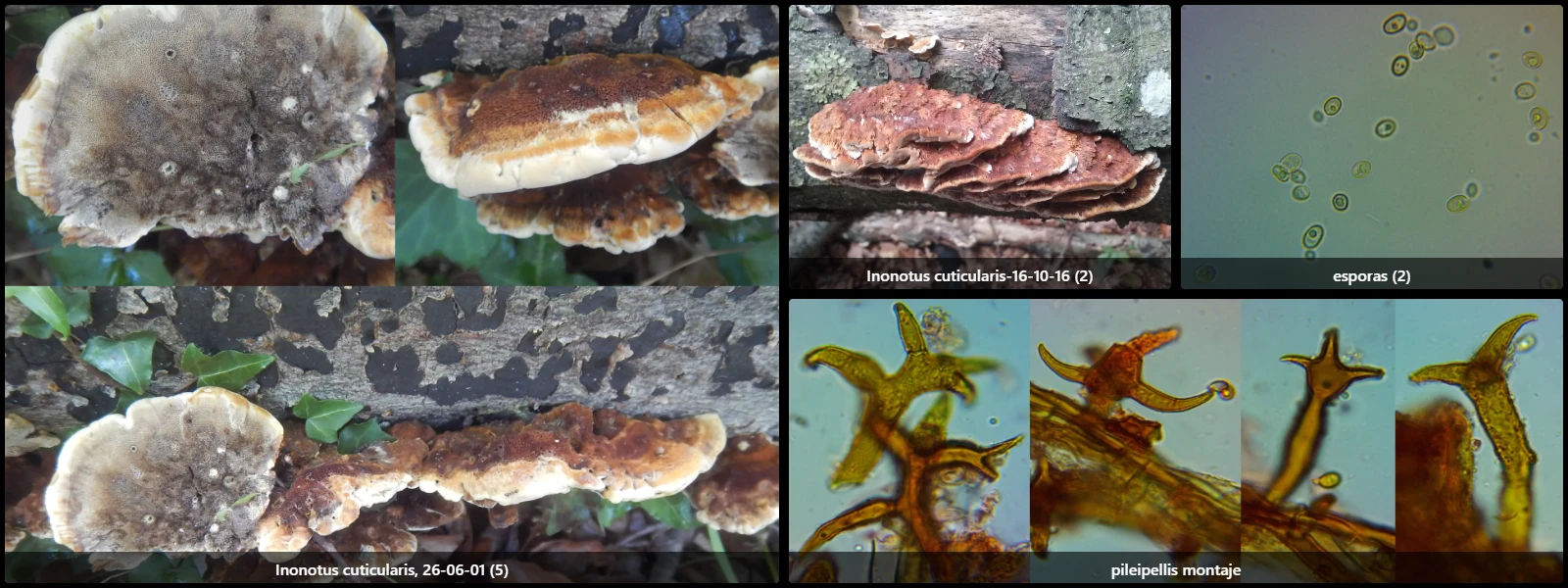
A fungus that produces annual, pileate basidiomata up to 20 cm wide, typically growing in imbricate clusters. The pileus is tomentose, with colouration ranging from yellowish-brown or brownish to rust-brown or reddish hues.
The hymenophore consists of rounded pores, 3 to 5 per mm, brownish to greyish in colour.
Microscopy reveals a hallmark feature that makes it readily identifiable: the setal hyphae of the pileipellis. These are very abundant, up to nearly 100 µm long, branched or hooked with up to 5 or 6 prongs.
An uncommon species fruiting on broadleaved wood, primarily on Quercus and Fagus, exhibiting both parasitic and saprophytic behaviour.
We have recorded it twice, both on dead wood of Fagus sylvatica: first in October in Orozko (Bizkaia), and secondly in Orduña (Bizkaia) in early June.
The microscopic images in this study correspond to the latter collection.
Geographic references
Map generated from global occurrence data from GBIF. GBIF.
Study measurements
Values in Microns (µm)Macroscopic gallery
.webp)
Microscopic gallery