Inocybe psammobrunnea
Bon
Study description
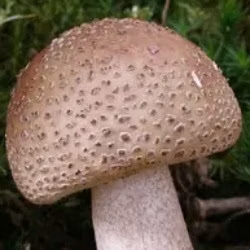
Medium-sized Inocybe with a pileus reaching up to 5 cm in diameter. The cap is covered with brownish fibrils, except for the central disc or umbo, which is typically greyish-white, especially in early developmental stages.
A species that appears late in the year and even through late winter or early spring, in sandy soils or gardens, associated with species of the genus Pinus.
Formerly known as I. griseotarda, it belongs to a section containing several closely related taxa.
I. griseovelata is practically indistinguishable macroscopically; however, it lacks caulocystidia. I. tarda, conversely, has a darker pileus with almost no whitish fibrils at the centre, and a stem that, although displaying pinkish flushes like psammobrunnea, is smooth rather than striate.
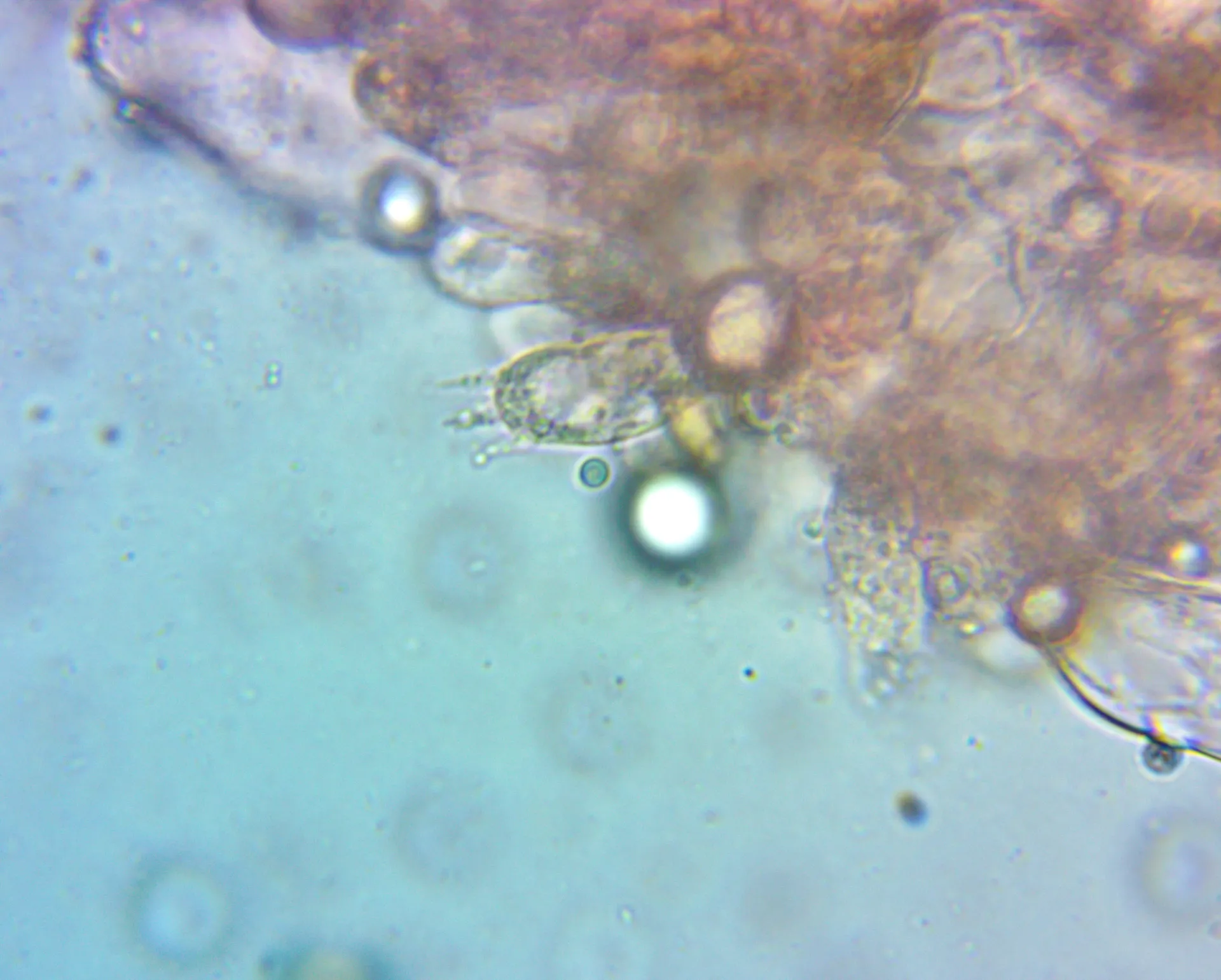
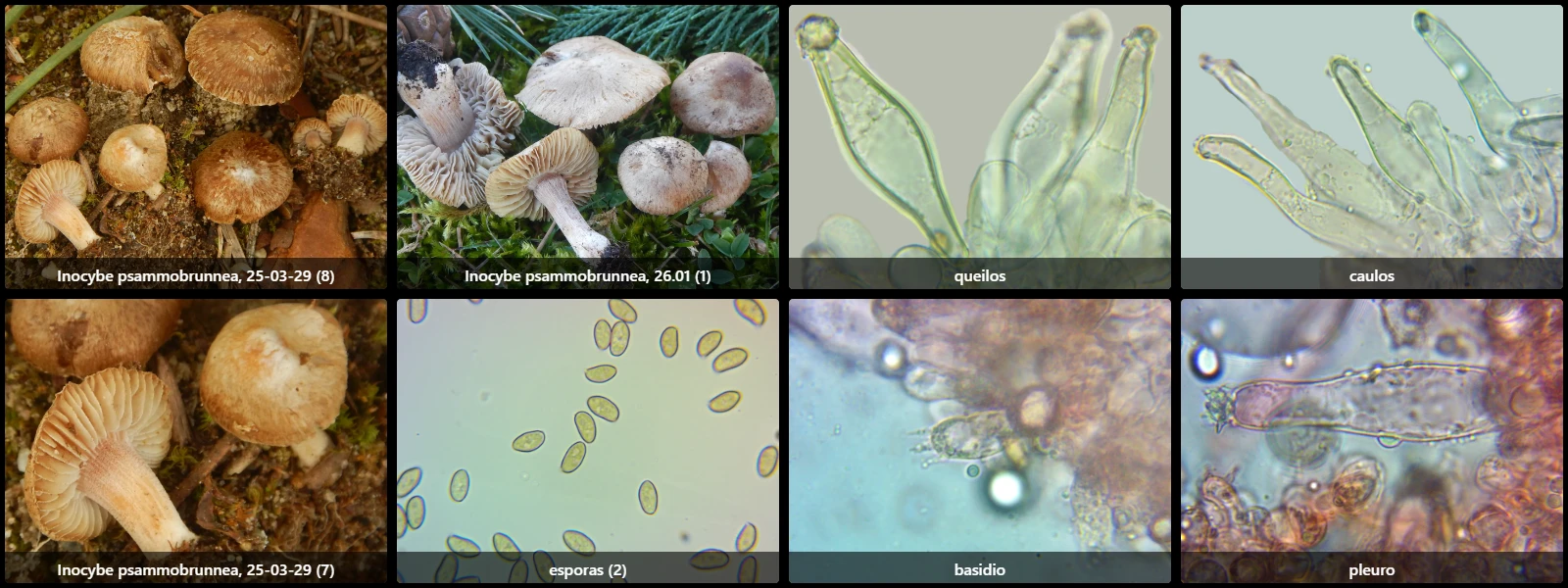
Both macroscopic and microscopic images correspond to two separate collections made in March and January: one in a garden in Zuia (Álava), under Pinus pinea and Chamaecyparis lawsoniana, and the other in Oña (Burgos), in sandy ground under Pinus pinaster.
Geographic references
Map generated from global occurrence data from GBIF. GBIF.
Study measurements
Values in Microns (µm)Macroscopic gallery
.webp)
Microscopic gallery